

Article
3 min read


Institutions have a short window to get ahead of market, technological and regulatory changes
European payments are rarely dull. The ink has barely dried on the instant payments regulation, and the next round of updates is already being written.
Whether PSD3, DORA, Verification of Payee, or the impending ISO 20022 deadlines, staying current has become a discipline in its own right.
The decisions you make about your payment infrastructure in the next 18 to 36 months will define your competitive position for a decade.
Here is what European banks need to understand across three interconnected dimensions:
Let’s start with the biggest trends of the next three-to-five years.
Here are six we believe will be in play:
The G20 has set a target that 75% of cross-border payments must be completed within one hour by 2027. Today, only around 35% meet that threshold. The EU has moved first, making instant euro credit transfers mandatory, and the pressure will spread globally. Banks can no longer treat speed as a premium feature. It’s becoming a standard requirement.
In Europe, PSD3 mandates higher-quality open banking APIs across the EU. Direct bank-to-bank rails are replicating — and in some cases bettering — the infrastructure that has underpinned corporate payment flows for years.
Things are moving swiftly in the UK, too. Support for account-to-account (A2A) transactions is ramping up, as payments of this kind grow at 53% year-on-year. The recently launched UK Payments Initiative (UKPI) will be a key scheme in taking on the card giants.
Regulations in both the EU and UK will effectively make A2A infrastructure mandatory for PSPs (Payment Service Providers) by 2028. Take the lead in this shift, and you’ll have a headstart over your rivals. Then, you can reap the benefits through new commercial payment flows.
The UK’s mandatory Authorised Push Payment (APP) fraud reimbursement regime is already in force. UK PSPs are required to pay up to £85,000 if fraud happens on their watch.
The EU’s PSR regulation will introduce spoofing liability, and Verification of Payee (VoP) is mandatory across SEPA. The compliance burden is now on PSPs. If they fail to embed measures to tackle the issue, then there is no upper limit on what banks may be required to reimburse.
Swift’s migration is reshaping interbank messaging across CHAPS, TARGET2, and SEPA. It’s a big shift in the structure, validation, and processing of payment instructions. Banks still running legacy message formats or translator services face big risks: data truncation, validation failures, and rejected payments, with hard deadlines now in force. Find out if banks are ready in our ISO 20022 research.
Until recently, AI-driven fraud detection, intelligent payment routing, and automated reconciliation were competitive advantages. They’ll soon be prerequisites.
Banks that have not embedded real-time machine learning into their payment operations risk falling behind, especially as fraudsters evolve their methods faster than financial institutions’ systems can respond.
AI is also beginning to reshape payment modernization. Complex platform migrations have historically been slow and costly. AI-assisted delivery models can shorten those timelines. The industry is heading in this direction, with tools such as RedCompass Labs’ Payments Expert Agent among the early examples of AI embedded in the payments modernization workflow, not just the payment flow.
The digital euro is in an advanced design phase, and the UK is exploring a retail digital pound. Banks must make decisions today around:
These strategic moves will determine whether they are set up to handle tokenized settlement when it arrives.
You must ask yourself: how do stablecoins fit into my existing infrastructure?
The payments industry is still the most valuable part of financial services. You only need to look at the numbers to understand the scale.
If the global payments industry were a country, its $2.5 trillion in annual revenue would place it among the world’s ten largest economies, larger than Italy and nudging France. It moves a barely comprehensible $2 quadrillion across 3.6 trillion transactions, value equivalent to roughly eighteen times the entire world’s annual output. And it’s on track to reach $3 trillion by 2029.
Europe sits at the heart of that: the region’s shift to real-time money is one of the fastest anywhere, with euro-area instant payments now mandatory under EU law and adoption climbing quickly.
Eurozone banks were mandated to send instant payments in October 2025, with April 2026 marking the first mandatory PSP (Payment Service Provider) compliance reporting. The structural shift from batch to real-time is happening now.
In the UK, the National Payments Vision is driving a retail infrastructure overhaul. Pay.UK is delivering an ISO 20022 upgrade to Faster Payments through 2025 to 2027. The Bank of England is consulting on near-24×7 CHAPS settlement. The UK now has over 16 million Open Banking users, with Variable Recurring Payments accounting for 16% of UK Open Banking transactions as of end-2025.
For banks, the next competitive frontier is agentic AI. These are systems that autonomously select and optimise payment methods on behalf of clients. Whoever controls this layer will effectively control the customer relationship.
In cross-border payments, stablecoin B2B volume surged 733% in 2025 to approximately $226 billion. Regulated rails are taking shape: Europe’s MiCA is already live, and the UK’s stablecoin regime, jointly overseen by the FCA and the Bank of England, was finalised in draft this June ahead of a 2027 go-live. You need a strategic position on tokenised settlement now, particularly for always-on corridors where SWIFT batch cut-offs create settlement risk.
The requirements for payment processing have shifted: from batch to always-on, from on-premise to cloud-native, and from reactive to AI-embedded.
SEPA Instant settlement must complete in under 10 seconds. Payment hubs need five-nines availability (99.999% uptime). Planned downtime is no longer viable: maintenance must be hot-patched on live systems, and if one payment rail becomes unreachable, the platform must reroute automatically with a full audit trail of every switch.
Elastic scalability handles high-volume peaks — month-end BACS runs, year-end SEPA bulk — without over-provisioning permanent capacity. Microservices allow independent upgrades of payment scheme modules as ISO 20022 rulebooks evolve. Multi-cloud or cloud-agnostic deployment addresses DORA resilience requirements and removes single-vendor lock-in. API-first design supports open banking natively and enables future VRP and embedded finance capabilities without re-engineering.
Authorized push payment (APP) fraud, where a scammer tricks their victim into sending money for goods or services that may not exist or never arrive, grew by 20% in 2025. Instant payments, which are fast and irrevocable, make stopping them even harder.
Banks must score transactions in real-time at the moment of payment initiation — not post-settlement — using behavioral analytics, device intelligence, and transaction graph analysis. Explainable AI is required for both regulatory compliance and dispute resolution.
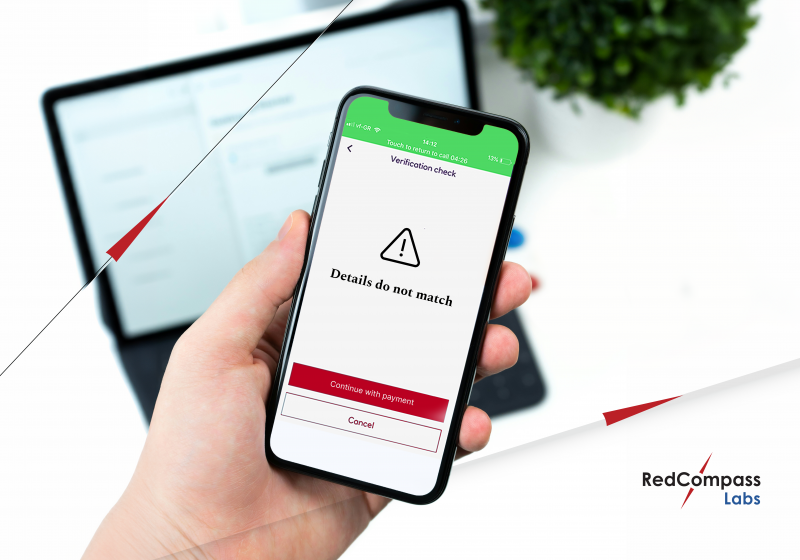
For UK payments, Confirmation of Payee (known as Verification of Payee in Europe) must be integrated directly into payment hub processing for every Faster Payments Service transaction. On the EU side, Verification of Payee requires a real-time API call to the national gateway within a 5-second service-level agreement, with bulk validation for EBICS (Electronic Banking Internet Communication Standard) and host-to-host corporate batch files.
Every result — match, close-match, or no-match — requires defined notification workflows and a full audit trail. A big task.
Banks operating across European corporate payments need to run SEPA Credit Transfer, SEPA Instant, SEPA Direct Debit, SWIFT, BACS, and Faster Payments – ideally on a single hub. Payment initiation must cover EBICS 2.5 and 3.0, Host-to-Host connectivity, PSD3-compliant Open Banking APIs, and an e-banking channel for corporate self-service. Legacy channels face a hard retirement deadline in November 2026.
You have the next 18 to 36 months to get ahead of these changes.
Regulatory mandates won’t wait. ISO 20022, PSD3/PSR, IPR, and DORA all carry binding deadlines. Legacy platforms require a major rebuild to comply cost-effectively — and the timelines are not moving.
Batch-only architectures do not comply. The mandated 24/7/365 availability requirement for SEPA Instant and Faster Payments is incompatible with legacy batch infrastructure.
Fraud liability exposure is unlimited. PSD3/PSR extends PSP liability for APP fraud where VoP is not implemented or monitoring is inadequate. There is no monetary cap.
Corporate clients are already expecting more. EBICS 3.0, ISO 20022-native ERP integration, real-time camt.052 intraday reporting, and VoP capability are now table stakes for corporate treasury clients. Banks that cannot deliver them risk losing clients to platforms that can.
And the competitive gap is widening every quarter. New-generation payment hubs offer lower costs, elastic scalability, and faster scheme onboarding. The longer modernisation is deferred, the harder it becomes to close the gap.
Invest in the right infrastructure now and you’ll be in with a fighting chance. Wait, and the window will close.
We are payments modernization experts. We’ve helped banks all over Europe (and the world) tackle some of the biggest changes over the last 24 years. Find out how our Payments Expert Agent can cut your scrum teams in half, helping you modernize faster, better, and for less.
Share this post

Pratiksha Pathak
SVP, Head of Payments, RedCompass Labs

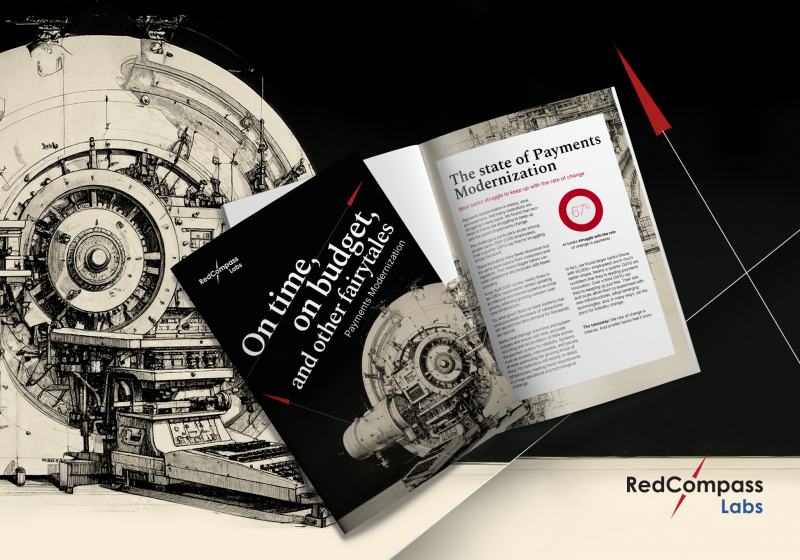
Most payments modernization projects overrun, go over budget, and fail to deliver to the original spec.






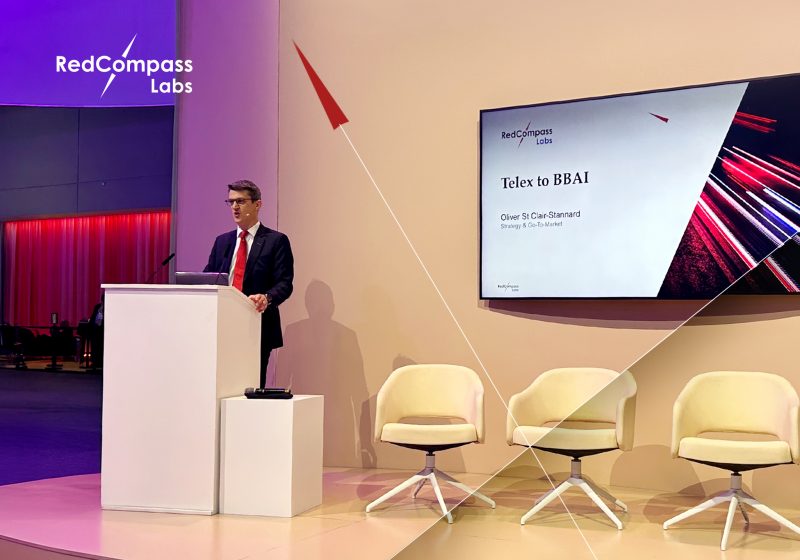
We once trusted humans to type payments over telex.
The payments modernization is plagued by four systemic issues.


The payments industry is no stranger to transformation, and today...

AI helps banks modernize payments faster.
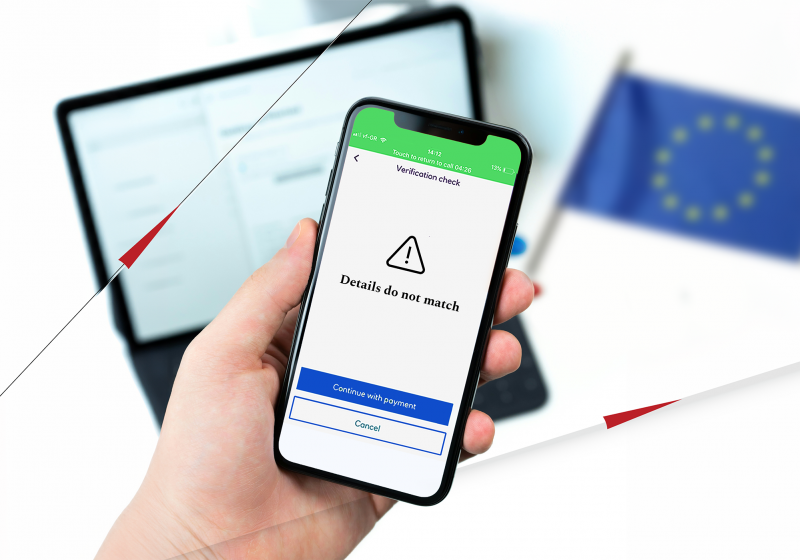
Europe adds payee checks to instant payments

Unlock the insights that will shape your AI strategy...
Gated content


Interoperable, frictionless (and soon invisible) instant payments will...
Gated content