Coal and gas-fired power stations aren’t fully disappearing, but renewables are playing a bigger role. Modern power grids are a mix of fossil fuels, wind, solar, and hydroelectric generation. No single renewable source dominates because each depends on different conditions – the wind’s not always blowing, solar panels don’t work at night, and hydropower depends on reservoirs staying full, so it’s vulnerable during prolonged dry spells. The grid needs several sources to carry the load.
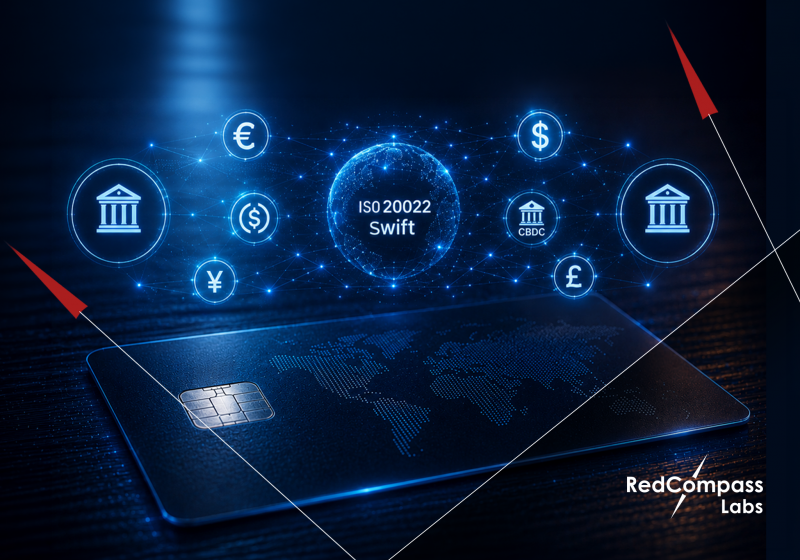
Our latest research report shows that banks are building systems for digital money in the same way. They’re not betting on one model. Instead, most of the 300 senior payments professionals we surveyed are exploring stablecoins, tokenized deposits, and Central Bank Digital Currencies (CBDCs). This means they’re not bound to a single money type or settlement model and can use the relevant model depending on the use.
But with so many new models in play, how do banks ensure they’re connected? And whose rules govern them?
Banks are keeping their options open
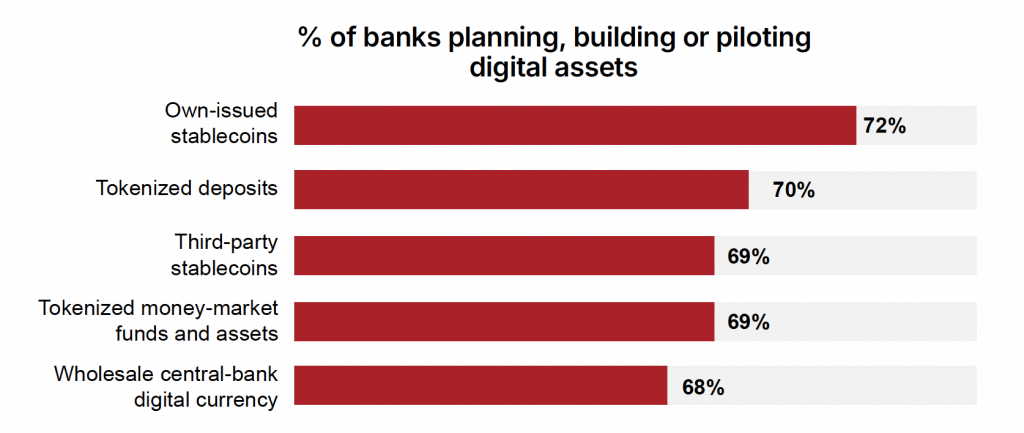
Our survey found that 72% are planning, building or operating their own-issued stablecoins. Almost as many (70%) are exploring tokenized deposits, third-party stablecoins (69%), and wholesale CBDCs (68%).
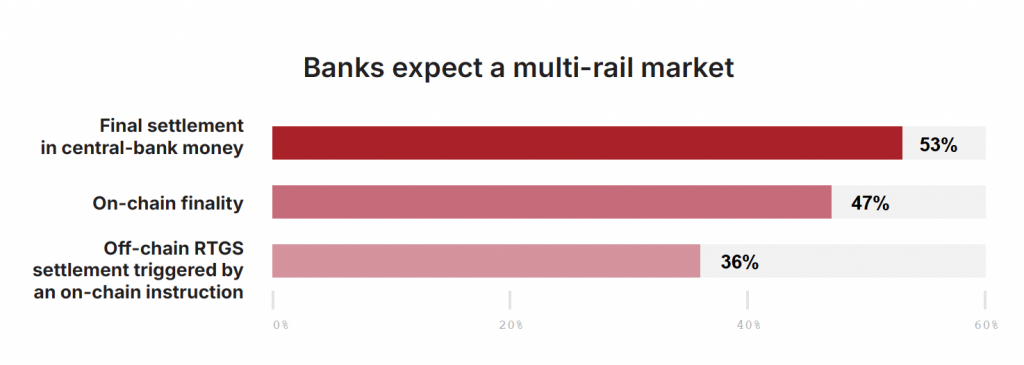
It’s a similar story with settlement. When asked where final settlement will occur, no single model dominates. Over half (53%) expect it to occur in central-bank money, 47% expect on-chain finality, and 36% envision off-chain RTGS settlement, triggered by an on-chain instruction (respondents could choose multiple options). As with power generation, each works best in different conditions. Central bank money suits domestic settlement, on-chain finality offers speed, and off-chain RTGS may work best in certain payment corridors.
The fragmentation issue
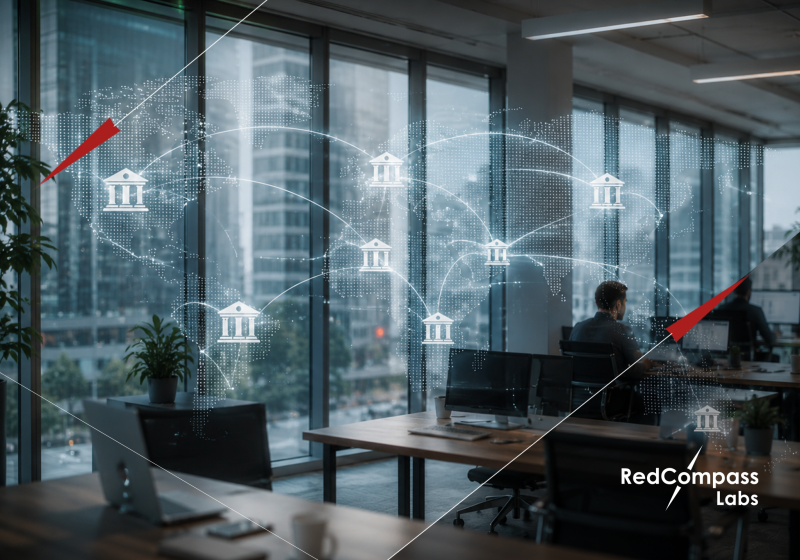
Keeping every option open creates a problem of its own. As digital money moves from an experiment to real-world use, each coin or token is being built across different technologies. Whether it’s Corda, Quorum, a private ledger like Swift’s, or public blockchains, none of them naturally talk to each other. That makes interoperability a genuine concern, and the industry knows it. For 28% of our respondents, the biggest concern is interoperability with existing ISO 20022 systems and account-based rails. Along the same lines, 22% are worried about fragmentation: too many competing token networks that aren’t compatible.
ISO 20022 is the best candidate for a common language to link different digital asset formats, and 85% of banks say their on-chain instructions carry or map to ISO 20022 data. But connecting different rails will require more than shared messaging standards or compatible APIs.
Banks must also be able to determine when settlement is final, identify the parties to a transaction, and maintain a consistent record across systems.
What’s more, token networks can use different data structures, governance arrangements, and approaches to identity. A wallet address may not carry the information attached to an account-based payment.
In our view, complete technical standardization is unlikely. Banks will need to exchange value and information between networks without losing control, transparency, or certainty.
The cost of hedging
Fragmentation goes beyond which ledger a bank chooses; it also impacts the bank’s infrastructure. That means changes are needed to support these new rails. More than half (57%) expect to build new systems or upgrade existing ones, and 21% expect to connect through a partner or network. Of those anticipating the upgrades, 61% expect the payments hub to be affected, and a similar share (60%) is planning for changes to the core banking system or ledger.
These aren’t simple systems to upgrade. That may explain why only 10% of banks exploring their own stablecoins have actually launched one.
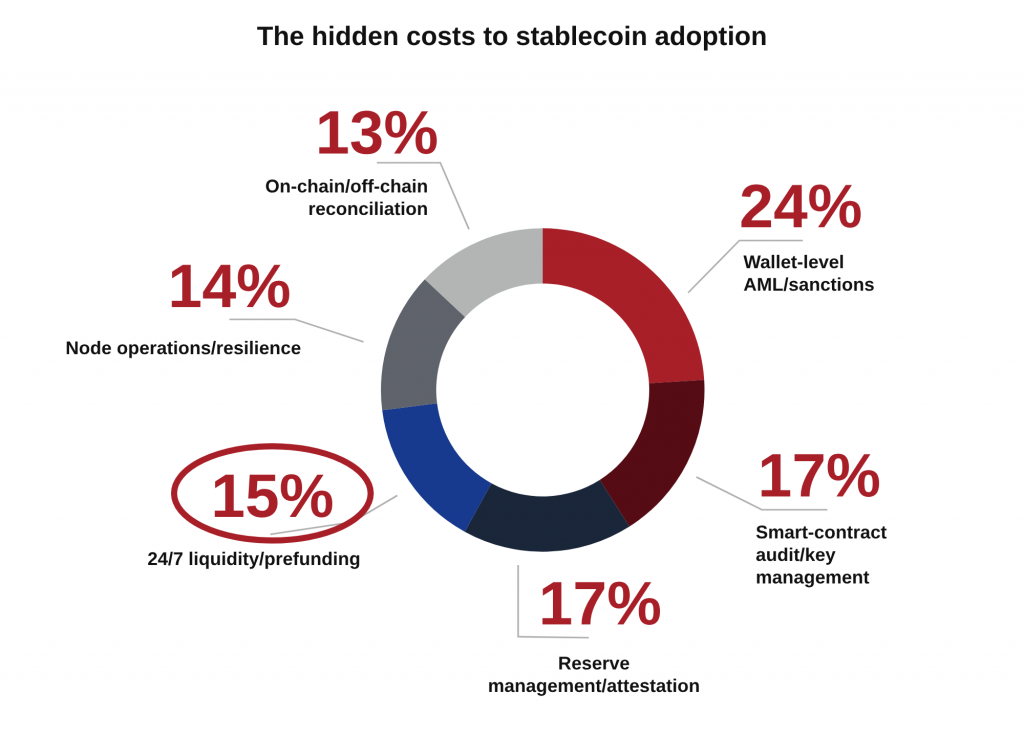
Building the infrastructure is one problem. Once it’s operational, banks have to ensure sufficient liquidity at all times to meet instant payment obligations across both new and traditional rails. However, only 15% of banking leaders see 24/7 liquidity and pre-funding across time zones as the top hidden cost of running digital money rails.
Not one respondent said they completely understand the costs of running digital money rails, suggesting that 24/7 liquidity costs may be underestimated. What they will need to understand is that stablecoins, tokenized deposits, and CBDCs each have their own settlement paths.
This means funding three non-fungible pools in parallel, each with its own timing, credit exposure, and prefunding requirement defined by internal treasury policies. Banks that model funding pools will be better positioned when the rails go live.
Who owns settlement?
Banks can model against cost, but accountability is harder. If a bank can’t confirm when settlement is final, find out who is involved, or keep a single, consistent record across systems it doesn’t control, then who’s responsible if something goes wrong? And whose rules apply?
The answer won’t be clear for some time. Markets, regulators, and banks will get there by finding which models they trust. But banks don’t need to wait for that answer to make good decisions now.
Hedging is the smart move. As long as it’s deliberate. For every rail a bank connects to, it should be able to answer four questions:
Where does settlement become final?
Who is liable for the money?
How will payment data be carried over to existing ISO 20022 systems?
How will it fund that rail around the clock?
The strength isn’t in the number of rails, it’s in how well your infrastructure can handle each of them.
Are banks actually ready for digital money?
Supporting stablecoins, tokenized deposits, and CBDCs only works if the infrastructure can keep up. Get your copy of our latest report and see how banks are preparing.