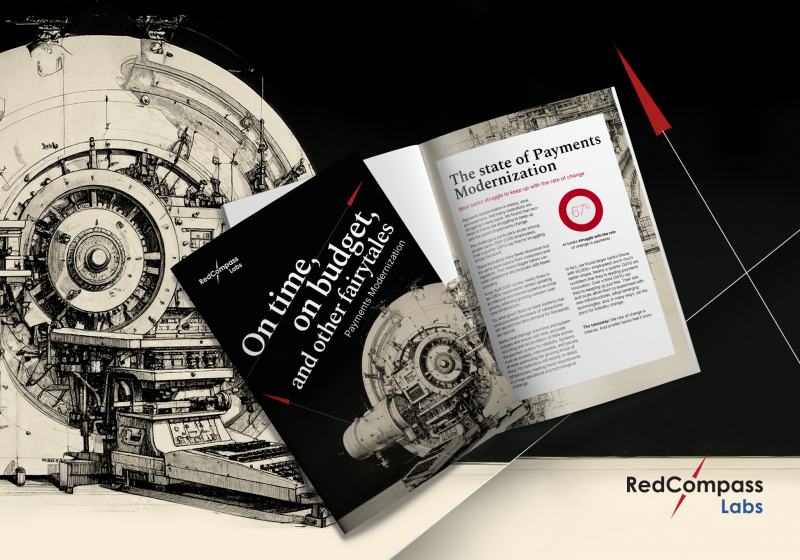

Article
6 min read
The hidden cost of ISO 20022 messages
Migration was only ever the first invoice


Payments are evolving faster than many banks can realistically respond – 2026 promises to bring even more change.
The pace of change in payments was relentless in 2025.
Instant payments went live across Europe, cross-border flows evolved, AI accelerated rapidly, and ISO 20022 passed a major deadline.
But the real question is: what happens next?
We’ve identified seven trends shaping payments modernization in 2026. Here’s what will define this year.
If you thought your ISO 20022 journey was done, think again. 2026 brings a whole host of extra changes.
From November 2026, unstructured postal addresses will no longer be supported in CBPR+ messages. Swift, SEPA (the Single European Payments Area for euro transfers), and CHAPS (the UK’s high-value same-day payment system) will all reject payments with unstructured data. So, banks must adopt fully structured or approved hybrid formats, or face delays, higher costs, false compliance hits, and closer scrutiny.
Most banks are dealing with decades of inconsistent address data. It’s fragmented across onboarding systems, channels, and payment engines.
And the change doesn’t stop with structured addresses. Exceptions and investigations handling is next, followed by testing operational resilience.
Market infrastructures will evolve in parallel. Real-Time Gross Settlement (RTGS) systems and High-Value Payment System (HVPS) platforms will continue to refine ISO rulebooks, adopt hybrid addressing, and implement CPMI minimum data harmonisation requirements ahead of the end-2027 deadline. These changes will directly affect cross-border interoperability and liquidity management.
The ISO 20022 transition does not end with migration. It demands ongoing data discipline, operational readiness, and governance. Banks that accept this shift will unlock the value of structured data. Those that do not will continue to absorb cost, risk, and regulatory attention.
Payments modernization is under pressure. New rails, formats, and regulations have made change constant and high stakes. Recent outages illustrate the risk.
In 2025, the European Central Bank (ECB) went offline for seven hours, Citibank suffered a nationwide outage affecting 200 million customers, and the UK Treasury wrote to nine major UK banks to ask why there had been 800+ hours (about 33 days) of unplanned downtime in two years. These incidents are symptoms of systems too complex to modernize manually.
In 2026, this is where AI truly comes into play.
Generative AI is now industrialising how systems are upgraded and supported. It can read rulebooks, map schemas, generate documentation, support testing, and even code, freeing experts to focus on critical judgment.
This is Built-By-AI (BBai): a measurable, auditable way to track how much change is generated by AI and accepted by humans. Today, most banks are at 0%. Early pilots hit 5–10%, and over five years, leading institutions could reach much higher, with humans supervising, steering, and signing off. Hybrid intelligence ensures human oversight remains central while AI handles repetitive, error-prone tasks, improving speed, accuracy, and resilience. Watch this space.
2025 was about making instant payments work. 2026 is about making them work properly.
What does that mean? Well, name checking and verification of payee requirements are introducing new friction in the flow of instant payments.
For example, European rules mandate that individual payments must be validated one by one. But how does that translate to bulk files? How do you process a “close match” result in a batch of payments in time if it requires human review?
As a result, legacy enterprise resource planning (ERP) systems, designed for batch processing, are under strain. And back-office teams are seeing how minor discrepancies, such as accents, punctuation, or trading versus legal names, can delay payroll, invoices, and supplier payments.
The response in 2026 needs to go beyond tactical fixes. Payment Service Providers (PSPs) and corporates must align processes, standardize records, and improve ERP metadata. Governance is critical. From deciding when to prioritise speed or control, to ensuring results are stored, rechecks are handled, and users are notified clearly.
Those that move beyond compliance-driven patchwork towards resilient, always-on operations will set the benchmark for efficiency, reliability and trust.
What’s more, EU banks in non-euro countries, such as Poland and Sweden, are required to implement SEPA Instant payments mandatorily by January and July 2027. For these institutions, 2026 is the critical preparation year—a window to upgrade infrastructure, adapt operating models, clean up data, and train teams before instant payments and verification become unavoidable at scale.
Instant payments are a data, process, and governance transformation. The organisations that treat 2026 as a year of deliberate preparation will be best placed to succeed in 2027 and beyond.
Stablecoins will continue to gain momentum, offering near-instant settlement across global infrastructure without relying on local banks or legacy correspondent networks.
In 2025, Visa and Circle partnered to bring USDC settlement to U.S. banks. And Visa reported that its stablecoin settlement activity has reached an annualized run rate of more than $3.5 billion, as of November 30, 2025. This is still small compared with Visa’s broader fiat settlement (roughly $17 trillion processed on the Visa network annually), but it marks a meaningful early milestone in institutional stablecoin settlement.
Regulation is evolving, too. In the US, the GENIUS Act is shaping how stablecoins can be issued and integrated into financial institutions, while in Europe, the Markets in Crypto-Assets (MiCA) framework is creating a harmonised regulatory approach for stablecoins across the EU.
Widespread adoption will take time, but stablecoins are becoming inevitable. Banks that stay on the sidelines risk disintermediation as settlement and liquidity migrate elsewhere. Those that integrate stablecoins within regulated payment and treasury models have an opportunity to unlock new revenue, improve cross-border efficiency, and remain relevant as global payments infrastructure evolves.
Ultimately, though, stablecoins won’t replace banks; they will replace friction. Cross-border payments are only the most visible use case; the deeper impact is real-time settlement, programmable money, and radical transparency. This breaks float income and squeezes FX spreads, shifting value away from delay-based economics toward speed, scale, and automation. Banks that stay relevant move from balance holders to infrastructure operators.
As payments modernize and real-time rails expand, fraud is accelerating in both scale and sophistication. Faster settlement and always-on systems amplify the impact of scams, from investment fraud to impersonation schemes, increasingly orchestrated by organised criminal networks that exploit human behaviour rather than technical weaknesses.
Most fraud originates outside the banking perimeter, across social media, messaging platforms and digital marketplaces. Traditional controls are bypassed entirely. By the time a transaction reaches the bank, the damage is often already done. In a real-time payments environment, malicious activity moves at machine speed, leaving little room for recovery and significantly raising the stakes for banks and customers alike.
The problem is global and industrialised. Large-scale scam operations, including so-called “pig butchering” schemes, have driven tens, and likely hundreds, of billions in losses worldwide, with severe financial and emotional consequences for victims.
Keeping pace requires a fundamental shift in mindset, not just better tools. This is not only a payments problem, and it is not a banking problem. It is a collective failure across platforms, financial institutions, regulators, telecom providers, and governments, while highly organised criminal networks operate in plain sight, using increasingly sophisticated technology.
Fraud prevention must move upstream and become a shared responsibility, built on real-time data sharing, cross-sector collaboration and accountability at every point where harm begins. Payments modernization without parallel modernization of financial crime frameworks simply moves money faster into the hands of criminals. If we want systems that are truly resilient, we must redesign them around prevention, not reimbursement, and accept that incremental change is no longer enough in a world where crime already operates in real-time.
Canada’s Real-Time Rail (RTR), the country’s new national instant payments infrastructure, is approaching a critical phase. Payments Canada has completed much of the core technical build and is progressing through successive testing stages, with broader industry testing expected in 2026. A production launch will follow. While timelines are tricky (they remain subject to the realities of large-scale market infrastructure delivery), the direction of travel is now clear: real-time payments are coming to Canada.
The question for banks and PSPs is no longer whether Canada will adopt a true real-time payment rail, but how ready they will be when RTR goes live. The RTR promises 24/7, data-rich, near-instant settlement that can support a wide range of retail and commercial use cases. This means faster access to funds for businesses and consumers. It will enable new services such as instant payroll, just-in-time supplier payments, and real-time insurance disbursements. And all of this will drive efficiency and economic growth.
A critical enabler of this transformation is the Retail Payment Activities Act (RPAA), which introduces supervision for PSPs and opens the door for non-financial institution players to become members of Payments Canada. This regulatory shift will allow PSPs to connect directly to the RTR, fostering greater innovation and competition in the Canadian banking sector. By broadening access, Canada is creating a more dynamic ecosystem where fintechs and alternative providers can deliver new, customer-centric solutions.
Canada’s Real-Time Rail should be viewed as a long-term structural change to the payments landscape rather than an immediate catalyst for transformation. The institutions that ultimately benefit most will be those that treat RTR as an operating model shift—requiring new approaches to liquidity, risk, and customer experience—rather than as another infrastructure program.
The G20 and CPMI are committed to faster, cheaper, and more transparent cross-border payments. But progress has been uneven. The latest tracking shows retail P2P costs still average 2.6% per $1,000 – far from the 1% target. Now, the Financial Stability Board warns that full global alignment by 2027 is unlikely. Targets for the speed of wholesale payments have improved, but gaps remain in transparency and interoperability.
2026 is therefore pivotal. Banks can either break the cycle of patchwork fixes and invest in scalable, modern infrastructure, or defer hard decisions yet again. ISO 20022 adoption, instant payments, and emerging real-time cross-border rails demand continuous transformation, not fragmented projects. Rising fraud risks and client expectations only heighten the urgency.
Institutions that industrialize change, leveraging AI and hybrid intelligence, will gain lasting advantages in speed, safety, and resilience. Those clinging to big-bang programs will struggle to keep pace in a payments landscape that no longer waits.
Share this post

Neha Dasani
Payments Strategy & Delivery Lead

Kellie Johnson
SVP, Payments, Americas

Santhosh Kumar
Senior Business Analyst

Silvija Krupena
Director of Financial Intelligence Unit

Oliver St Clair-Stannard
VP Strategy, Payments AI
Migration was only ever the first invoice

USD payments slow down once they cross the border

Postponing by two weeks gives T2’s address rules a grace period, not a rewrite

We need SLMs steering LLMs to build new payment flows
Not so long ago digital money was written off as a niche experiment, irrelevant to mainstream…
Gated content

What vendors, banks and systems integrators must do next
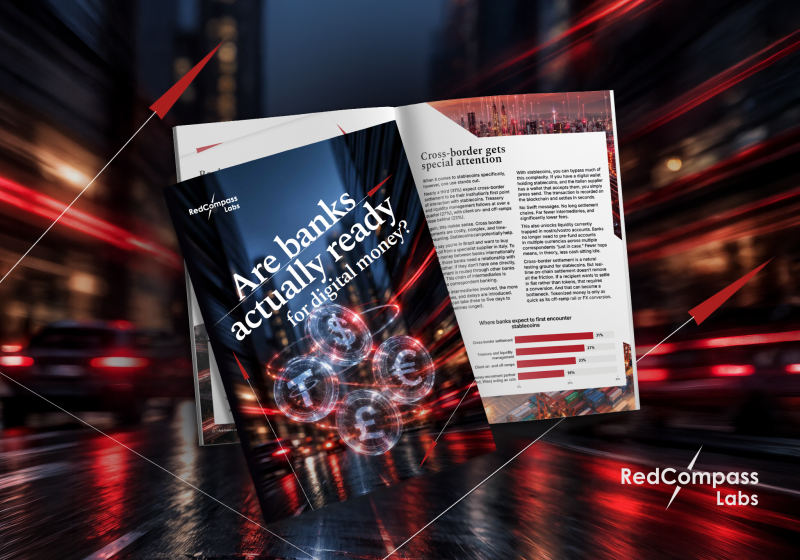
The industry is getting ready for stablecoins, tokenized deposits...

Nobody wants to say it: payments complexity exceeds...

SR 2026 has been postponed until 2027
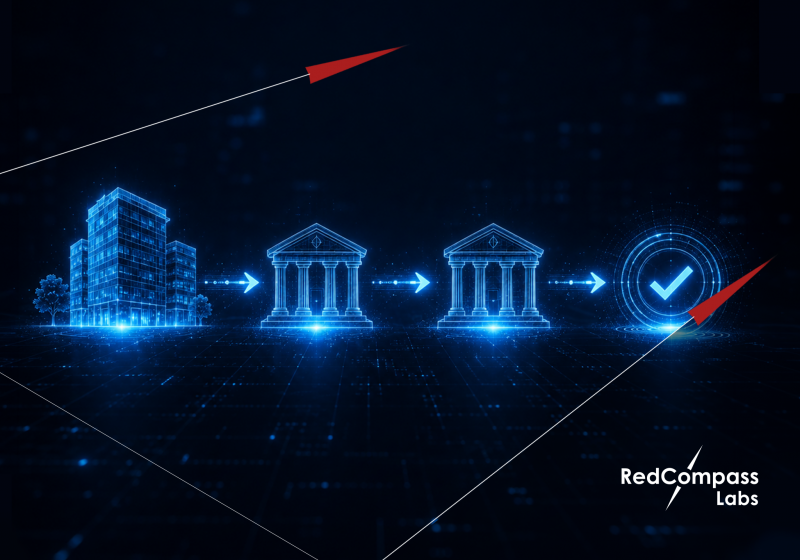
MT 101 is ending. Here’s what to do before the switch to pain.001
The Fed is tightening payee verification, tackling fraud and gearing up for ISO 20022

Six areas to focus your efforts for a successful launch

The European Central Bank will run a pilot, with a potential first issuance in 2029

Will ISO 20022 be the common language for digital money?

But the framework is missing ingredients. What will it take to succeed?

The Bank of England and FCA will jointly regulate the UK's digital currency
Institutions have a short window to get ahead of market, technological and regulatory changes

Everything you wanted to know about E&I, but wasn't covered in our webinar

Banks have until 2027 to move exceptions and investigations to ISO 20022

The clock is ticking...
Gated content