Regulation, legacy systems, and budget constraints are major barriers to payments innovation — not to mention delays in internal decision-making and a shortage of skilled personnel.
But what does that mean for payments modernization projects?
We asked 300 senior US payments professionals to find out. Here’s what we found:
Most payments projects are not delivered on time, on budget, or to spec
Nine in ten (87%) projects go over budget. Over eight in ten (83%) are delayed, and most do not meet the original specification (83%). That’s a massive performance gap.
Big banks did better across the board. Around a quarter (24%) say all of their projects were completed on time and on budget in the last 24 months. Just under a third (32%) say they were completed to the original specification.
By comparison, roughly one in seven small banks report that all of their projects were completed on time (15%) and to the original specification, while just over one in eight say their projects stayed within budget (13%).
Delayed projects cause big issues
So, what happens when payments modernization projects stall, fail, or change? The consequences are far-reaching. It’s not just about internal inefficiencies — they directly impact customers. They lead to outages, damage reputations, and hurt economic growth.
We asked banks what the biggest pains of delayed projects are, and found the following top issues:
-
Delays to other projects (47%)
Overrunning projects create knock-on effects. When one initiative stalls, it ties up resources, delaying others and creating a cascade of setbacks across the bank.
-
Reduced customer satisfaction (47%)
Customers — whether multinationals or individuals — expect instant, digital, and reliable banking services. When projects are delayed or rushed, service quality drops and customers notice.
-
Payments outages (43%)
This one is particularly alarming. In the last two years alone, nine of the UK’s top banks and building societies have suffered over 800 hours (33+ days) of unplanned outages. These outages disrupt businesses, damage reputations, and cost the economy millions.
-
Reputational damage (38%)
Nearly four in ten banks point to reputational damage from failed or delayed projects.
-
Scope reductions (37%)
Many banks are forced to scale back ambitions or cut features to meet deadlines.
-
Missing regulatory deadlines (36%)
Over a third admit to missing critical regulatory deadlines, risking penalties and credibility with supervisors.
The financial costs are massive
Nearly four in ten (39%) banks say their most recent delayed or over-budget payments project resulted in a financial loss between $500,000 and $1,000,000. On average, each troubled project carries a financial hit of $496,953.
That’s significant — especially when you consider that, according to KPMG, the average payments modernization project costs around £27 million. However, it’s important to note that these figures are based on survey responses rather than verified financial records, so they likely reflect perceived or estimated impacts rather than audited losses.
In practice, the true cost — once reputational damage, regulatory penalties, and long-term operational setbacks are factored in — may be considerably higher.
Why are the costs so high?
Part of the issue lies in regulatory penalties and the complexity of projects. Many programs are managed by large organizations with limited payments expertise, causing delays and costly errors.
When things go wrong, banks often have to bring in specialist payments teams at the last minute to rescue failing projects — adding further expense and compounding the overall impact.
Want to learn more?
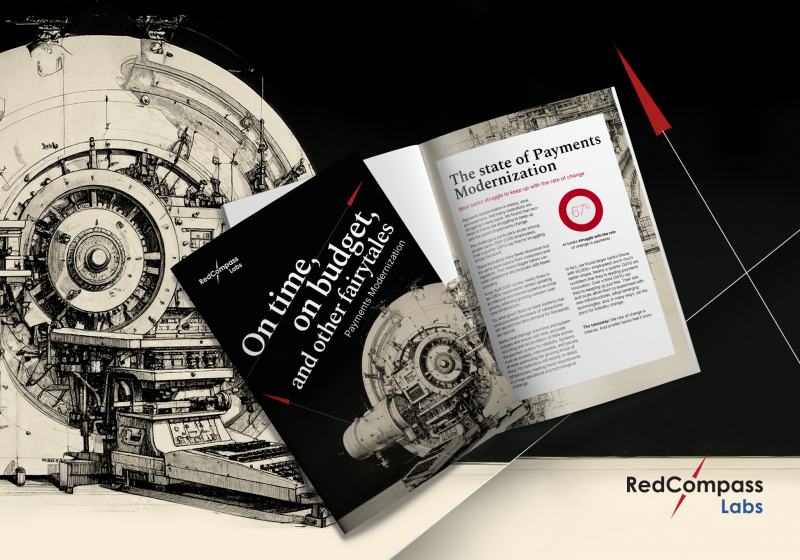
Download “Payments Modernization: On time, on budget, and other fairytales” today.