40 years ago, Madonna was the newly crowned Queen of Pop, the Gameboy hadn’t even been launched and Maverick and Goose were barely out of pilot school. It was a different era. Despite this, it was the last time the traditional MT investigation process was updated. Think about how the banking landscape has evolved since then.
Internet and mobile banking didn’t exist 40 years ago, neither did instant payments and there are billions more daily transactions. Despite this, the way that banks communicate with each other when payments go wrong hasn’t changed.
By November 2026, banks must be ready to receive new ISO 20022 Exceptions & Investigations (E&I) messages. By November 2027, they need to be able to send them too.
In our latest research report we discovered that on average financial institutions are spending $20m on the upgrades, with bigger banks reporting costs as closer to $30m.
By the time these upgrades are complete, multiple billions will have been spent across the global banking ecosystem. The key questions here are:
- How wisely is that money being invested?
- Do banks see this as an opportunity for strategic modernization or just a compliance box ticking exercise?
Compliance or transformation?
The industry is transitioning from free-format messages to structured workflows. There are new message types, structured fields and new purpose codes. In practice, this means that the widely used MT199 and MT299 messages are being replaced by structured ISO 20022 CAMT message flows. It’s a complete redesign of how payment exceptions are communicated, categorized and processed across the correspondent bank network.
Every bank must update their systems by the deadlines. Our research found a disconnect between how banks say they’re approaching the E&I transition and their apparent ambition for genuine change.
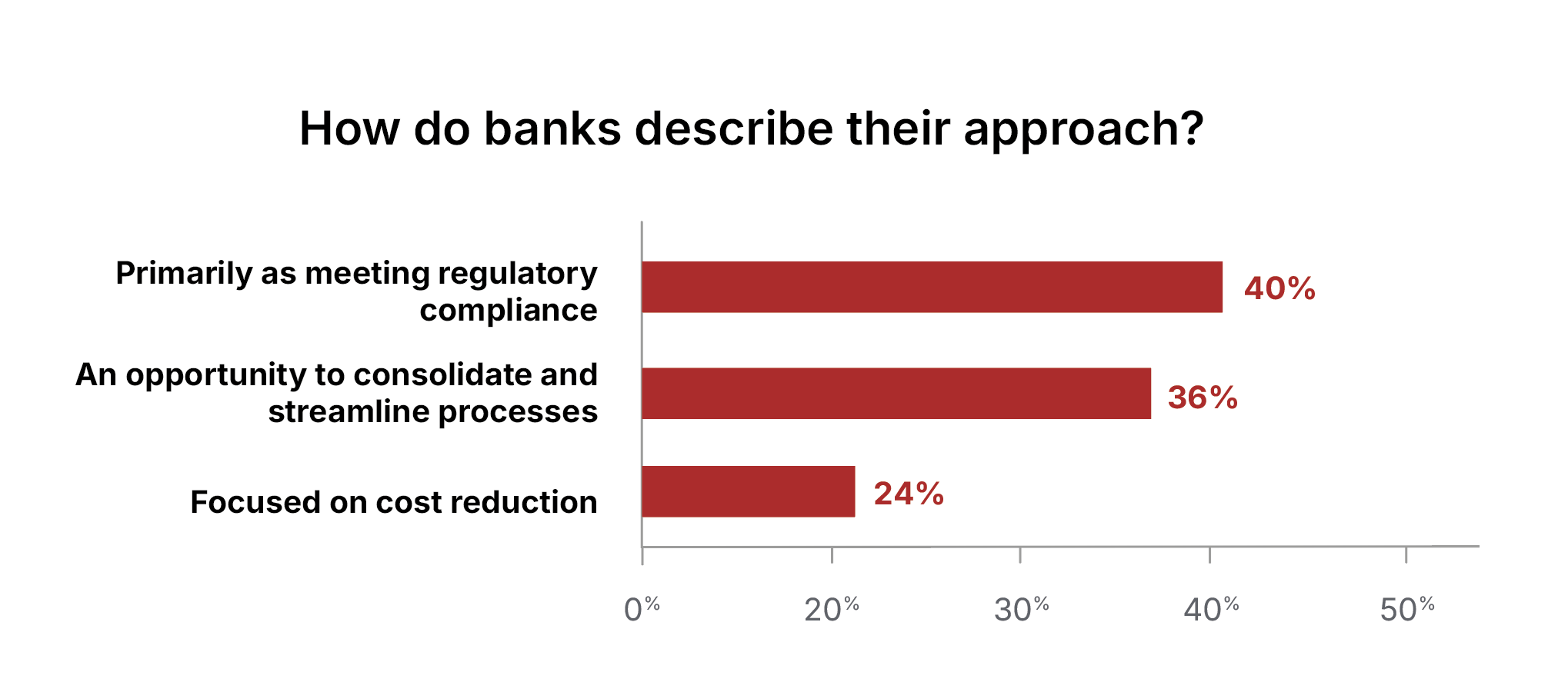
The data shows a 40%/60% split between the compliance vs transformation approach. A majority see the updates as a chance to reduce cost and/or consolidate or streamline their systems, but this isn’t reflected in their ambition for E&I reform.
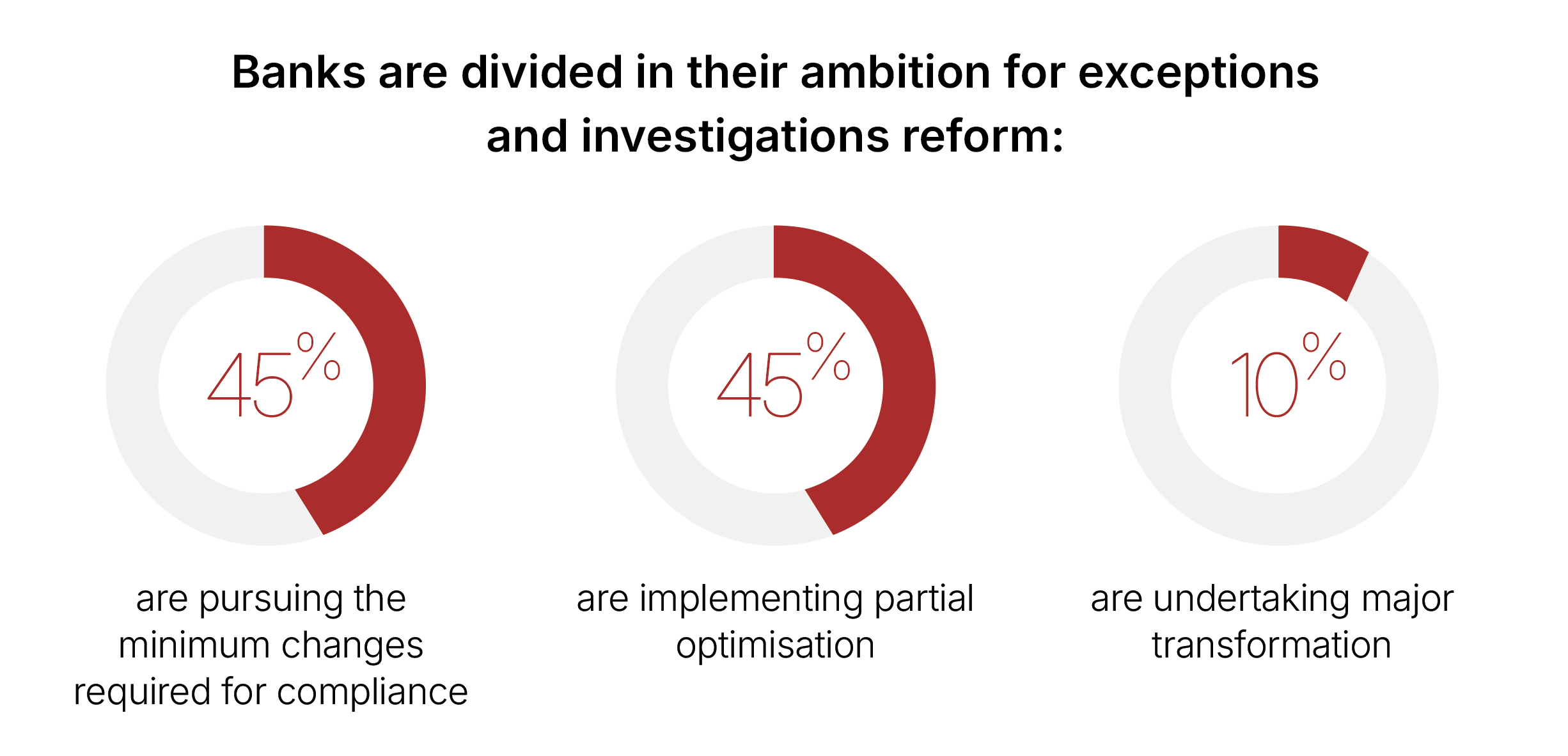
Despite 60% saying they are approaching the upcoming deadline as an opportunity to remodel their case management program, only 10% are using the ISO 20022 changes to strip back and overhaul how they handle E&I.
The intent and execution are not aligned. The work has begun, but very few banks are treating it as a transformational opportunity.
The benefits of aiming high
In our ISO 20022 research, we asked what payment professionals see as the benefits of the changes to E&I. Better client servicing, faster resolution and more complete data topped the list.
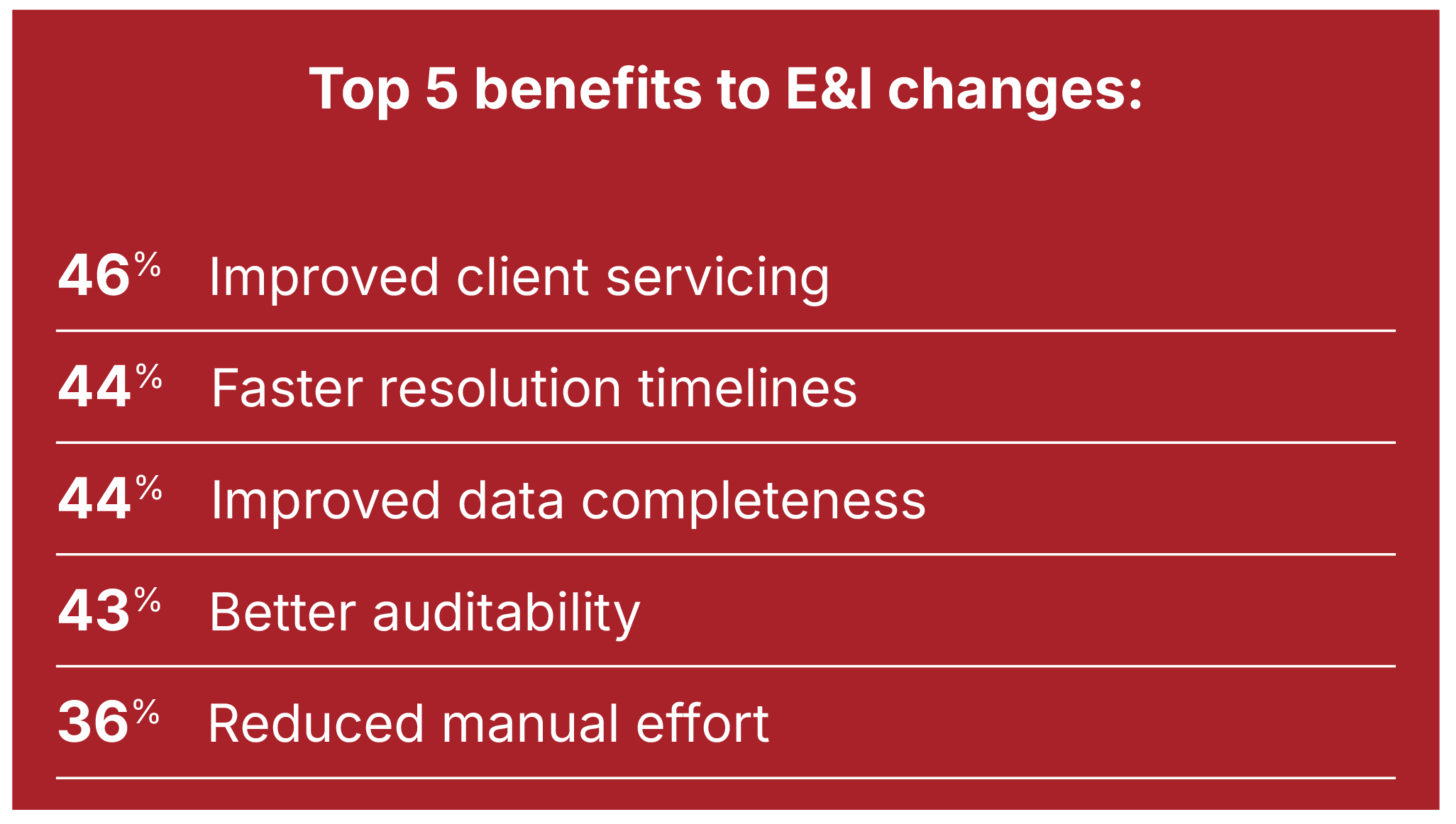
Better data makes for better investigations. It enables banks to categorize problems more clearly, trace issues across correspondent networks more easily and swifter resolution.
The benefits also extend to clients – they get better visibility and operations teams spend less time manually tracking down information. However, there’s no guarantee of seeing these benefits if financial institutions are only trying to meet the minimum threshold for compliance.
The new structured message formats create the conditions for these outcomes, but don’t deliver them on their own. What’s needed is deliberate, end-to-end workflow redesign that goes beyond the technical migration.
Do multiple initiatives = momentum?
A potential explanation for the gap between ambition and execution is the structures in place to ensure alignment with Swift’s Case Management evolution through to 2027.
Our data shows 98% of institutions have initiated strategic programmes or roadmap-driven initiatives. But action doesn’t always translate into success.
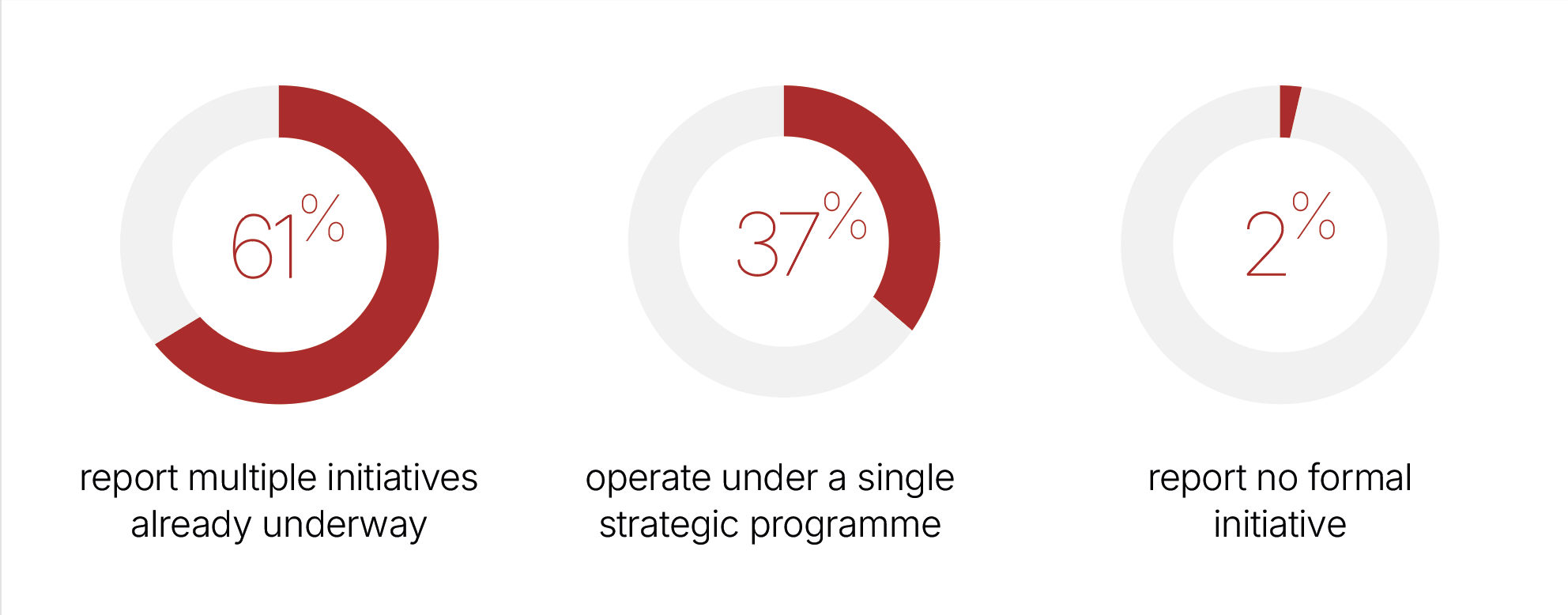
The banks running multiple parallel initiatives appear to have momentum, right? Not necessarily. What it actually suggests is fragmentation.
Think about payments, compliance, operations and technology teams all running independent workstreams. Each department only has oversight of their own goals, so will likely be optimising for their own priorities.
This suggests that the 61% of banks with multiple initiatives running are not redesigning a connected end-to-end workflow. The risk is that a lack of strong integration oversight will result in siloed delivery, especially as structured investigations sit across multiple functions.
If these functions evolve independently, with no central governance, who’s responsible for ensuring there’s a functioning and integrated process by the November 2027 deadline?
ISO 20022 deadlines are mandatory. Why not make it count?
The November cutoffs for E&I are set: be ready to receive messages by November 2026 and send them by 2027. But banks can choose how they approach these dates.
There’s no problem with simply aiming for compliance. Banks can meet the deadline and have an updated, more structured version of a process that’s been untouched for 40 years. But is that desired outcome from this multi-billion dollar project?
A bank that approaches this process with transformation in mind will come out the other side with faster resolution times, lower manual overhead and much better client visibility.
Download our latest ISO 20022 research report
We surveyed 308 senior payments professionals across Europe and North America about their ISO 20022 readiness for 2026 and beyond.
As well as focusing on Exceptions and Investigations, the report also explores the challenge of structured address migration. Both transformations are mandatory and technically complex, which impact core systems, data and operations.
Find out how your peers are handling the transition.